

Fujisan Hongu Sengen Taisha
富士山本宮浅間大社
A shrine at the foot of Mount Fuji that worships the mountain itself, and the head of more than 1,300 Sengen shrines across Japan.
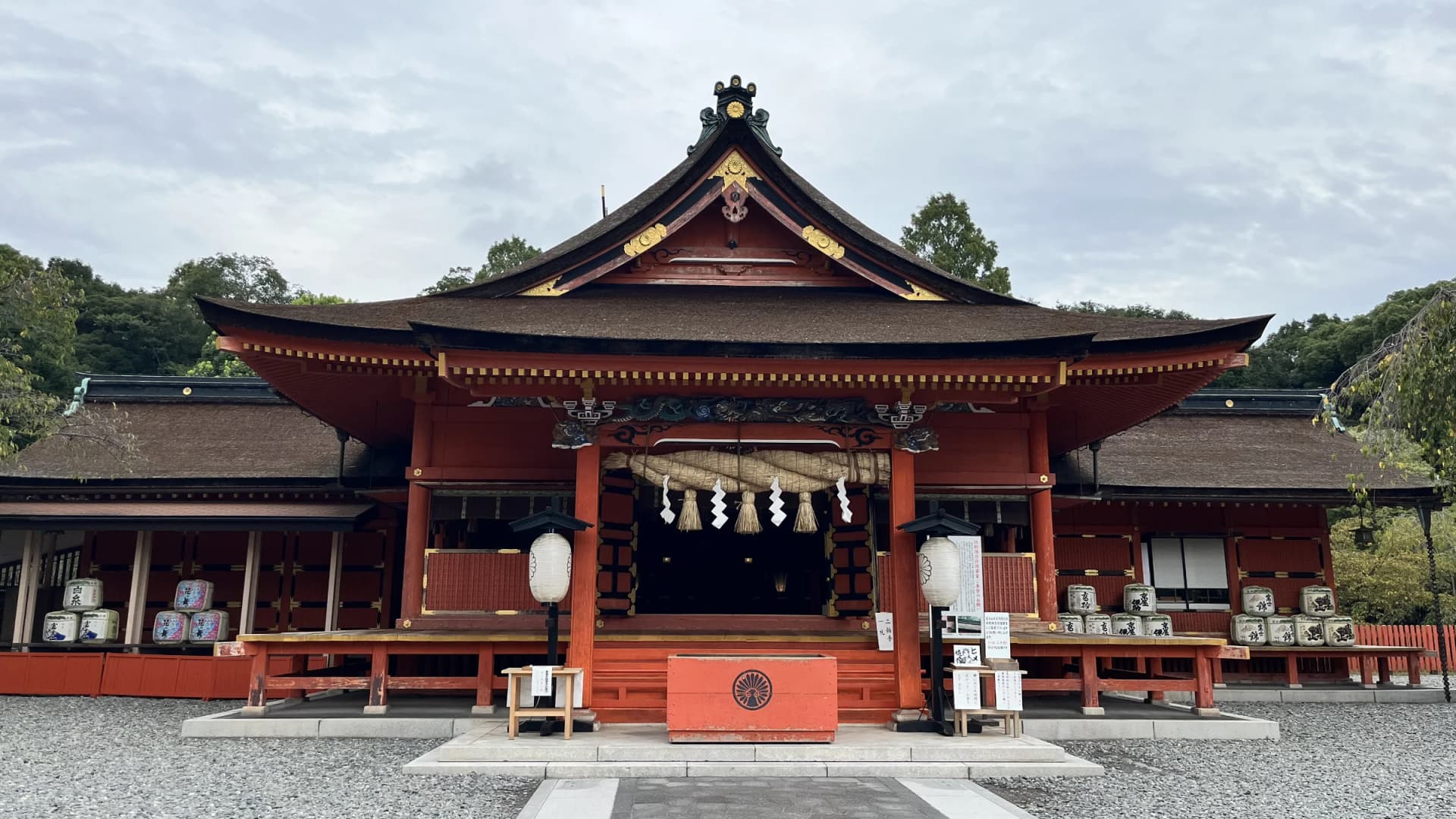
Fujisan Hongu Sengen Taisha stands at Fujinomiya in Shizuoka Prefecture, at the southwestern foot of Mount Fuji. The mountain itself is what the shrine worships, and the shrine is the head of more than 1,300 Sengen shrines around the country.
The deity is Konohana Sakuyahime, also called Asama no Okami. She is the daughter of Oyamazumi, the god of the mountains, and the wife of Ninigi, the grandson of the sun goddess Amaterasu who came down from heaven to rule the land below. Both of them are enshrined here beside her.
The story told of her is that, when her husband doubted that the child she carried was his, she shut herself in a hut without a door, set fire to it and bore three sons in the flames unharmed. From that she is asked for safe childbirth and for protection against fire, and prayed to for the household, for the crops, for fishing and for weaving.
Her name carries the word for blossom, so the cherry is her tree: more than 500 stand in the grounds, among them a weeping cherry said to have been given by Takeda Shingen.
The shrine's own record says that Mount Fuji erupted so violently in ancient times that the country around it was abandoned, and that an emperor had the goddess enshrined at the foot of the mountain to quiet it. This was the first shrine to do so, and the rest followed from it. At first the worship was at Yamamiya, six kilometres north of here, where there are no buildings at all: the mountain is worshipped directly across a stone enclosure, which is how it was done before halls were built. The move down to the present site came in 806, to ground where water from the mountain rises.
What stands now was built by Tokugawa Ieyasu after Sekigahara, more than thirty structures of which the main hall, the offering hall, the worship hall and the tower gate survive. The main hall is unusual: two storeys, about fourteen metres high, in a form named after this shrine and found nowhere else. It is an Important Cultural Property of the state; the worship hall and the gate are designated by the prefecture.
Ieyasu also made over to the shrine the upper part of the mountain itself. The climbing routes up Fuji are marked in ten stages, and everything above the eighth of them belongs to the shrine to this day, counted as part of its grounds.
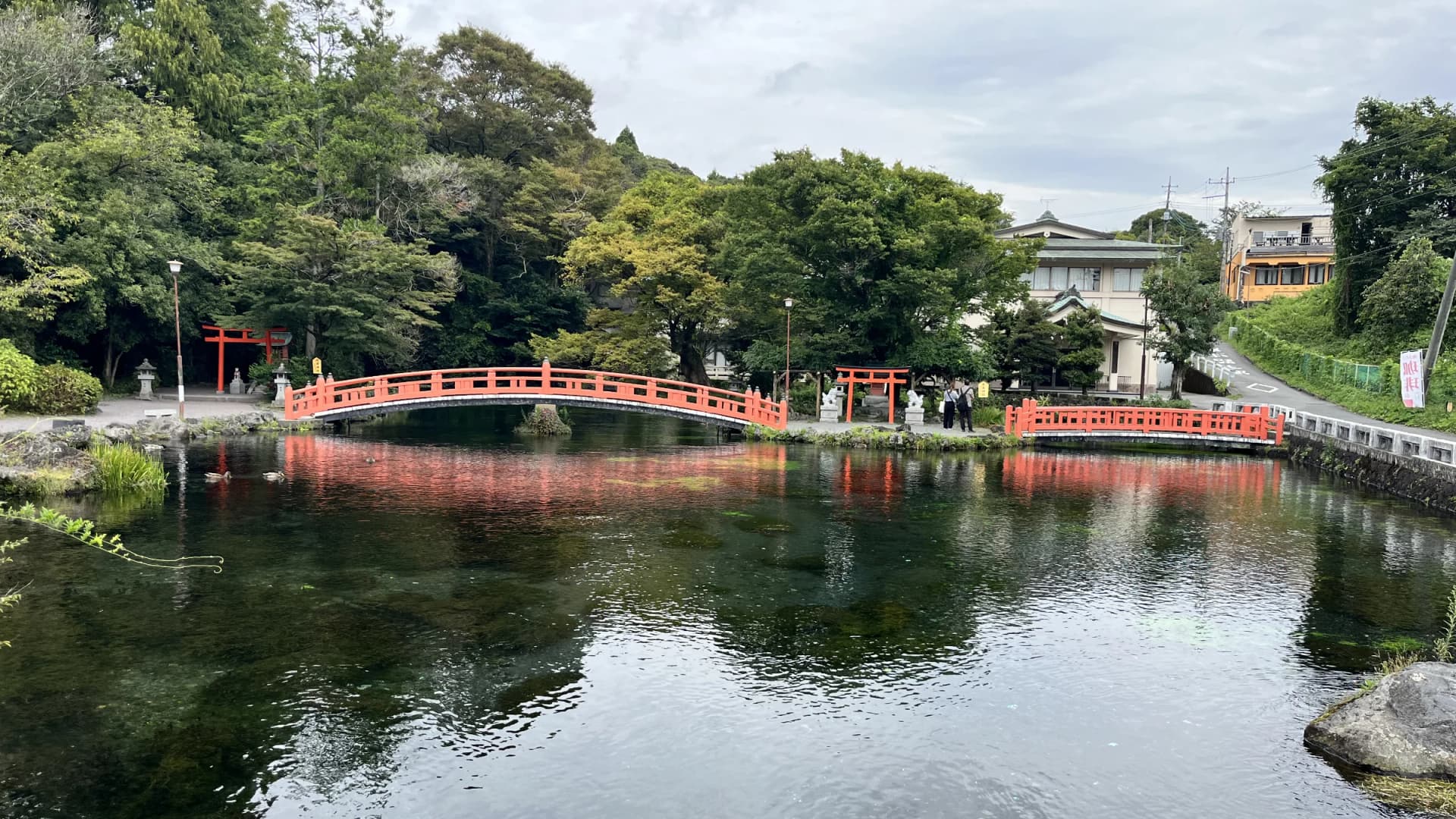
Outside the eastern gate lies Wakutama, a pond fed by snowmelt that has come down through layers of lava, clear and constant. It is a Special Natural Monument. Climbers washed here before setting out, and the practice of climbing Fuji as an act of worship, which grew into organised societies in the Edo period, began from this shrine.
The summit shrine is reached by the Fujinomiya route. Those who get there walk the rim of the crater, an hour or so round.
You might also like

Morioka Fall Festival
One of Iwate's most enduring celebrations, this autumn festival originated as prayers for harvest, now featuring ornate floats and traditional parades.
14–16 Sep 2026Morioka · Iwate
Nagano Gion Festival
The Nagano Gion Festival celebrates Susanoo-no-Mikoto, the deity of storms and protection, through mikoshi processions at Yasaka Shrine near historic Zenkoji temple.
6 Jun 2027Nagano
Kanamara Matsuri "Festival of the Steel Phallus"
An annual Shinto festival at Kanayama Shrine in Kawasaki featuring distinctive phallic imagery in decorations and parades while raising funds for HIV research.
5 Apr 2027Kawasaki · Kanagawa
Uto Shrine
Guardian shrine of Aomori dedicated to the Three Goddesses of Munakata, featuring grounds with a sacred spring and historic remains including haiku stones by Matsuo Basho.
Aomori
Jozankei Shrine
A Shinto shrine in Sapporo's Jozankei hot spring resort area, dedicated to the god of hot springs and healing, surrounded by nature and autumn foliage.
Sapporo · Hokkaido
Kumano Taisha Shrine
One of three major Kumano shrines in Japan, Kumano Taisha was established in 806 and is known as the Ise Shrine of the North for its significance.
Nanyo · Yamagata